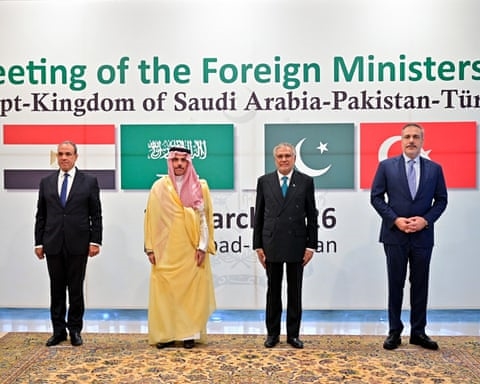
A diplomatic coalition comprising Egypt, Pakistan, Saudi Arabia, and Turkey is ramping up its efforts to mediate a cessation of hostilities in a major regional conflict. The primary aim is to de-escalate the situation and forge a path toward a sustainable ceasefire, while also positioning itself as a counterweight to the dominant influence of other regional powers.
The foreign ministers of these four nations convened recently in Islamabad for discussions described by observers as a significant step in formalizing this collaborative initiative. Analysts note that while these countries have engaged in prior consultations, the latest meeting marks a more concerted and public phase of their joint diplomatic venture.
The immediate objective of the group is widely understood to be halting the current cycle of military escalation. The conflict has reached a perilous stage, raising alarms about potential catastrophic consequences. Specialists warn that strikes on critical infrastructure, including nuclear and desalination facilities, could trigger environmental and humanitarian crises with devastating regional impact, a scenario that is concentrating minds among neighboring states.
The Islamabad talks yielded an initial, though limited, confidence-building measure. Reports indicate an agreement was reached to permit a daily quota of vessels sailing under a specific national flag to transit a key strategic waterway. More broadly, the quartet has positioned itself as a principal channel for dialogue with one of the main parties to the conflict, thereby maintaining an indirect line of communication with other major international actors.
The composition of this alliance is noteworthy. It includes nations with historically complex relationships, suggesting a pragmatic alignment of interests in the face of shared risks. For some members, participation appears to reflect a desire to keep multiple strategic options open, balancing a demand for accountability with deep concerns about the potential for prolonged chaos and instability.
The absence of another regional state, often seen as a natural partner for one of the members, was conspicuous. Reports suggest this absence may be linked to grievances over attacks on its energy infrastructure, which have cooled its appetite for active mediation on certain parties’ behalf.
Within the group, one member is viewed as particularly invested in the initiative’s success. Its officials have long advocated for a regional, multilateral approach to security discussions, arguing that key issues should not be negotiated solely through bilateral channels with powers outside the region. This stance is not universally shared among other Middle Eastern nations.
Senior officials from this country have framed the conflict in stark terms, cautioning that broader, long-term strategic designs are at play. They have warned that the war risks igniting deeper, decades-long sectarian and ethnic strife across the region, fundamentally redrawing maps and fueling prolonged internal conflicts. These officials have accused the initiating party of a strategy aimed at sowing division among regional states to isolate its primary adversary, urging neighbors not to fall into this perceived trap.
The diplomatic push comes amid reported shifts in public sentiment in a major Western power, where the war’s objectives are facing increasing scrutiny. However, mediators highlight a persistent challenge: the need for that same Western power to exert substantial pressure on a key ally to enable any potential negotiated settlement. The coming period is seen as a critical test of influence and political will, determining which relationships will ultimately dictate the course of events.
The formation and intensified activity of this four-nation bloc underscore the profound anxieties gripping the region. As violence threatens to spiral, this unexpected diplomatic alignment is emerging as a focal point for efforts to pull the region back from the brink and reshape a precarious balance of power.