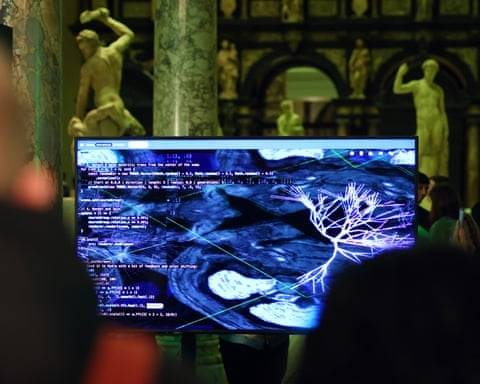
The grand halls of a world-renowned museum, typically a sanctuary for silent contemplation of centuries-old art, recently echoed with a very different kind of creativity. As part of a special evening event, the venerable institution transformed into a vibrant playground for digital and interactive art, showcasing how video games are firmly establishing themselves as a significant cultural force.
Visitors navigating the marble corridors encountered unexpected scenes. Beneath ornate architectural details, live programmers generated pulsating electronic music through streams of code, their digital visuals flickering on large screens. Elsewhere, groups gathered around installations, their laughter filling galleries as they collaborated on quirky, physics-based puzzles or guided whimsical characters through humorous scenarios on oversized displays.
For the event’s organizers, the intention was to explore the natural intersection of gaming and performance. Placing interactive experiences within the museum’s majestic setting turned players into inadvertent performers, with their actions and reactions becoming part of the spectacle. The shared experience of an audience engaging with a game, often with a playful and communal spirit, created a uniquely engaging atmosphere that felt both contemporary and strangely fitting.
This event continues a growing institutional interest in gaming culture. Curators emphasize the importance of presenting video games as a serious and complex part of our cultural landscape, worthy of the same thoughtful consideration as historical artefacts. By situating them alongside Renaissance paintings and Baroque sculptures, the context fundamentally shifts. It invites the public to consider games not merely as commercial products, but as creative works with artistic merit, historical connections, and social value.
A core theme of the evening was participatory creation. One interactive project saw a crowd singing along to algorithmically generated lyrics, while another space became a workshop where attendees designed their own video game-inspired publications. These activities highlighted the communal and creative spirit at the heart of many gaming experiences, moving beyond solitary screen time to shared, tangible interaction.
Experts in the field note a powerful synergy between games and gallery spaces. Both are, at their core, about crafting an experience for someone moving through a designed environment and responding to it. This makes museums a compelling and expressive venue to share not just games themselves, but the contexts, histories, and ideas behind them.
Events like this are part of a wider, global movement to integrate game culture into artistic institutions. From festivals in Europe to artist collectives in North America, there is a growing network dedicated to this crossover. For developers, showing their work in such a historic setting offers a unique thrill and a fresh perspective, placing playful digital creations in direct dialogue with centuries of human artistry.
In an era where discussions about video games are often dominated by industry revenues and corporate acquisitions, an evening like this serves as a vital reminder. It recontextualizes games, allowing us to appreciate them not just through the lens of commerce, but as a dynamic and legitimate part of our shared cultural heritage—a digital art form finding its place in the long story of human creativity.