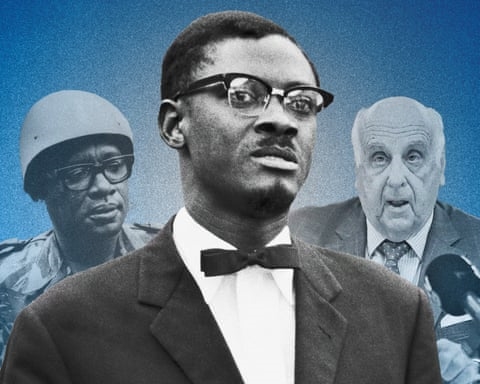
A Belgian court has ruled that a former diplomat will stand trial for his alleged role in the 1961 assassination of Patrice Lumumba, the Democratic Republic of the Congo’s first prime minister. This landmark decision marks a pivotal moment in a case that has haunted the African nation for over six decades.
Lumumba, a central figure in Africa’s anti-colonial movement, was killed just months after leading the Congo to independence. His fiery speech on Independence Day in 1960, which condemned Belgian colonial rule, made him a target. His subsequent detention, torture, and execution, aided by Belgian forces, became a symbol of foreign intervention crushing African self-determination. His body was dissolved in acid, and a single gold-capped tooth was taken to Belgium as a grim trophy.
For decades, the full story was suppressed. Under the long dictatorship of Mobutu Sese Seko, the military leader who overthrew Lumumba, open discussion of the murder was dangerous. The subject remained shrouded in silence and fear within the Congo until the late 1990s, following Mobutu’s death and a subsequent Belgian admission of “moral responsibility” in 2002.
The impending trial of 93-year-old Étienne Davignon, the last surviving Belgian accused by the Lumumba family, is seen not as an attempt to rewrite history, but as a crucial step toward legal accountability. Advocates argue it moves the case from an acknowledged moral failing to an established criminal act.
For many, the trial represents a long-awaited chance for truth and closure. It is a demand for a full, unredacted account of the events: who gave the orders, who carried them out, and why a leader’s life was so brutally erased. The loss extended far beyond one man. Lumumba’s vision was of a united, sovereign Congo, free from tribal division and foreign manipulation. His death is widely seen as a tragedy that derailed that potential and set a damaging precedent for the continent.
While a trial cannot undo the past, it represents a profound reckoning. After more than half a century of campaigning by the Lumumba family and others, it offers a formal chance to confront a foundational injustice and, perhaps, to finally lay a painful chapter to rest.