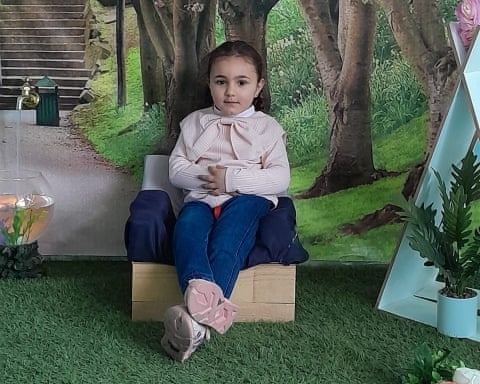
In the quiet of a home now filled with absence, a mother’s heart holds the memory of a name chosen with hope: Narjis, meaning daffodil. For Rania Jaber, that hope blossomed into a daughter whose light hair mirrored her namesake flower and whose spirit seemed wise beyond her six years. Today, that same home is a place of shattered quiet, a space where Jaber grapples with a loss that arrived with the thunder of an airstrike.
The incident occurred earlier this month in the southern village of Maifadoun. As Jaber hurried her children to flee escalating hostilities, her young daughter offered comfort. “Mama, you’re my life. Don’t cry,” Narjis told her. Hours later, an explosion leveled their family home. Narjis and her aunt were killed. Jaber and her two young sons survived, pulled from the rubble with minor injuries but bearing a wound of a different kind.
“She was like a blossom,” Jaber said, her voice faltering. “I still can’t believe my daughter is gone.” Photographs show a smiling girl, often in pretty dresses, proudly holding a school project. She dreamed of becoming a doctor. Her death is one of more than 120 such tragedies reported among children in the country since cross-border hostilities intensified at the start of the month, representing a significant portion of the overall casualties.
The trauma extends beyond a single family. In a separate strike in the town of Nabatieh, an entire family of six—a mother, father, and their four children—were killed. A neighbor, Hussein Youssef, recounted pleading with the father to evacuate. “They said they didn’t have the money,” Youssef explained. His own children, close friends with the lost family, are struggling with the sudden void. “My son was especially affected by the little girl,” Youssef said. “She really broke his heart.”
For a generation of children in Lebanon, this conflict marks the second major war in just three years. The violence, while concentrated in the south, has eroded any universal sense of security. Mental health experts warn of profound consequences. Exposure to such trauma can trigger developmental issues and antisocial behaviors, with effects growing more severe the longer the instability persists.
“Children wake in fear, parents carry unbearable worry, and the hurt will echo for years, if not generations, after the bombs fall silent,” noted a senior official with the national mental health program.
Jaber says she will seek psychological help for her sons when conditions allow, fearing the lasting impact. For now, the family navigates a crushing new reality. Her son Abbas still tries to buy sweets for his sister, only to be reminded she is not coming back.
In her grief, Jaber clings to the echoes of a gentle soul. “She was different,” the mother recalled. “She would tell me, ‘Mama, I want to sleep in your heart.’” It is a wish that now resides there as a permanent, painful memory, a blossom lost to the storm of war.