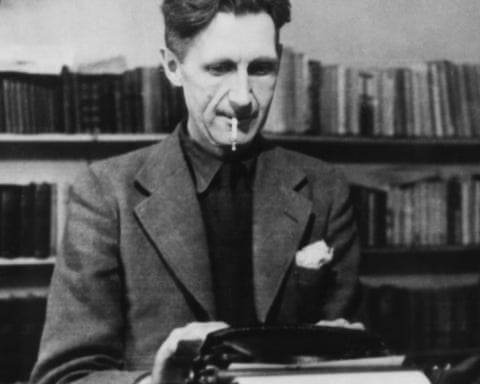
A recent film explores the enduring significance of George Orwell’s work, particularly his seminal novel Nineteen Eighty-Four, arguing powerfully for its continued relevance in contemporary political discourse. While the documentary effectively underscores the timeless nature of Orwell’s warnings about state power, propaganda, and truth, it stops short of a more rigorous interrogation of the author’s own complex history and beliefs.
The production gains considerable strength from the simple, potent device of having Orwell’s own words—drawn from his novels, essays, and personal writings—delivered in voiceover. This approach breathes new life into his prose, reminding audiences of its clarity and force. An intriguing thread woven throughout is the contrast between Orwell’s own physical fragility, as he battled tuberculosis while writing his final masterpiece, and the obsession with brute strength and fitness exhibited by the totalitarian regimes he dissected.
The film draws clear, unsettling parallels between the dystopian mechanics Orwell described and modern political realities, juxtaposing historical footage with contemporary figures. It also highlights his prescient insights into the role of technology in mass manipulation and distraction, foreshadowing debates about artificial intelligence and digital propaganda.
However, the analysis feels incomplete. The documentary touches on, but does not deeply explore, Orwell’s own contentious political actions, such as his controversial decision to provide a list of suspected communist sympathizers to British authorities. Similarly, while it notes the author’s evolution on certain issues, it offers only a glancing examination of more problematic aspects of his earlier views. The focus remains largely on the ideas within the text, rather than fully grappling with the contradictions of the man behind them.
Ultimately, the film serves as a compelling primer on why Orwell’s nightmares still resonate, convincingly arguing that concepts like “2+2=5” have moved from fiction to a modern political shorthand. Yet, by sidestepping a fuller portrait of Orwell’s complexities, it presents a narrative that, for all its strengths, doesn’t entirely reconcile the artist with his art. The work leaves viewers with a reinforced appreciation for Orwell’s genius, but also with a sense that the most challenging questions about his legacy remain open for debate.