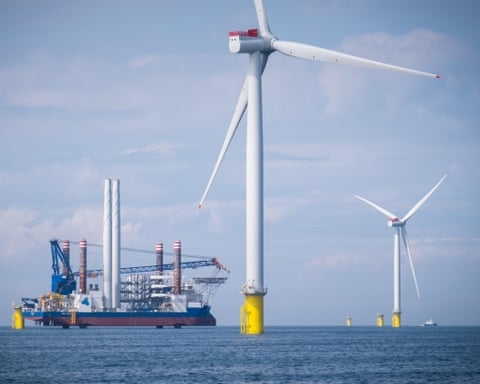
Critical offshore wind energy projects in the United Kingdom and Germany are at risk of significant construction delays due to escalating tensions in the Middle East, which threaten to sever a vital maritime supply route.
Industry analysts report that the effective closure of the Strait of Hormuz, a key global shipping chokepoint, could strand essential components manufactured in the Persian Gulf. These parts are destined for major wind farm developments in the North Sea.
The conflict has already severely disrupted regional oil and gas shipments. Energy sector officials now warn that contingency measures may be required to prevent setbacks for flagship renewable energy initiatives. Among the projects potentially affected are two large-scale offshore wind farms planned for UK waters off Norfolk, alongside several installations intended to supply power to Germany and the Netherlands.
The developer for the UK projects, a major German energy firm, has contracts with a Dubai-based manufacturer to supply over 180 structural components from a fabrication yard in the United Arab Emirates. These wind farms are a cornerstone of national strategies to dramatically increase offshore wind capacity by 2030, with the potential to power millions of homes.
A company spokesperson stated that while the safety of personnel in the region is the primary concern, the impact on supply chain operations has so far been limited. The firm is actively monitoring the situation and preparing mitigation strategies should the shipping lane remain blocked long-term.
While Gulf fabrication yards currently represent a small segment of the global renewables supply chain—which is predominantly based in Europe and Asia—they were projected to become a significant hub in the coming decades.
The disruption also extends to critical energy infrastructure in Germany. A major transmission system operator has contracted a UAE yard for structural steel components, including a massive foundation for a high-voltage offshore grid connection. Shipments for at least three other major grid projects are also linked to suppliers in the region.
The operator noted its supply chain is geographically diverse, with only components for one specific project currently in production in the UAE. It declined to comment on potential schedule impacts for its other developments.
This supply chain vulnerability is expected to intensify calls for greater domestic manufacturing of key renewable energy components to bolster energy security and meet climate targets. Industry representatives emphasize ongoing collaboration with governments to incentivize local production and reduce dependency on international maritime routes susceptible to geopolitical instability.