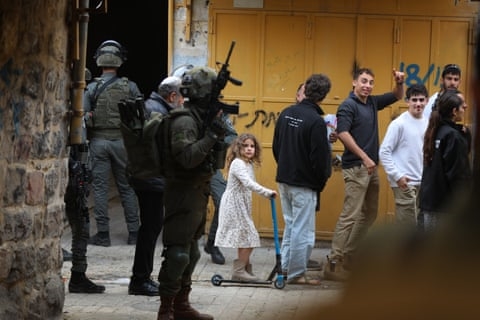
A comprehensive review of legal records and public data reveals a stark reality: for over six years, not a single Israeli citizen has been prosecuted for the killing of a Palestinian civilian in the occupied West Bank. This systemic failure to hold perpetrators accountable has created what critics describe as a state of de facto impunity for violence against Palestinian residents.
The situation has grown so severe that it has prompted an unprecedented outcry from within Israel’s own former security establishment. Dozens of retired senior commanders—including former heads of the military, intelligence agencies, and national police—have issued a stark warning. In a collective letter to the current military leadership, they decried what they termed “organized Jewish terrorism,” arguing that the state’s failure to confront these daily attacks poses a fundamental threat to Israel’s future.
The violence has claimed numerous lives. Recent weeks alone have seen ten Palestinian civilians killed, among them young children and their parents. Former officials argue these are not isolated acts by rogue individuals but coordinated assaults, sometimes involving those in uniform, targeting people and property with lethal force.
Legal statistics underscore the scale of the problem. According to data from rights monitors, Israeli security forces and settlers have been responsible for the deaths of well over a thousand Palestinian civilians in the West Bank since 2020, a significant number of them minors. Yet the judicial outcome is consistently absent. Police investigations into settler violence overwhelmingly close without indictment, with conviction rates vanishingly small. Similarly, complaints filed against soldiers for acts including killings almost never result in criminal charges.
This institutional inertia has led some prominent Israeli figures to call for external intervention. Former Prime Minister Ehud Olmert has explicitly urged the International Criminal Court to consider arrest warrants, arguing that if domestic authorities will not act, international law must “save the Palestinians and us” from state-tolerated violence he likens to a campaign of ethnic cleansing.
Analysts note, however, that this internal criticism often comes from figures who historically supported or oversaw the expansion of Israeli settlements—a project intrinsically linked to the current dynamic of control and violence. The criticism, while significant, frequently frames the issue as a failure of the current government rather than acknowledging the settlements as a decades-long, cross-party state policy that enables such impunity.
Within the Israeli legal community, the mechanism of this impunity is well understood. Rights advocates describe a system functionally designed to shield perpetrators rather than deliver justice, where investigations are routinely stalled and closed. For years, a handful of token prosecutions were maintained, arguably to provide a legal fig leaf against international scrutiny. Recently, even that minimal performance has largely ceased under political pressure, with the cost of pretending to enforce the law now deemed higher than the cost of open impunity.
The ultimate responsibility, as stated by former Israeli justice ministers themselves in another unreported letter, rests with the government. They accuse it of allowing an “active and horrific ethnic cleansing” and state that anyone—soldier or commander—who enables these attacks through action or inaction bears direct responsibility.
While the military’s top commander has recently called for action against settler violence, sovereignty in the territory rests with Israel’s security forces. Their consistent record, supported by the data, is one of inaction and protection for those who commit violence, leaving a population under occupation without legal recourse or protection.