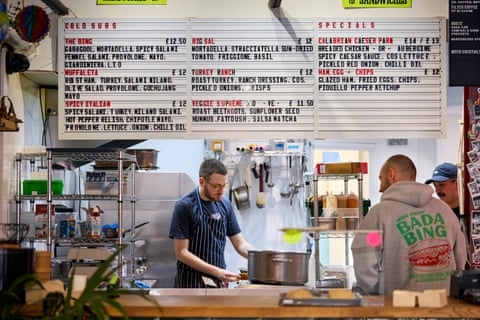
A curious scene unfolds regularly in the heart of the city. Crowds gather, braving the chill, not for a concert or a protest, but for a sandwich. They spill from alleyways, clutching hefty, foil-wrapped parcels, their focus absolute. This isn’t a relic of pandemic dining; it’s the new normal at establishments like Fat Pat’s, a tiny takeaway hatch that has become a culinary landmark by specializing in hyper-regional American sandwiches.
Fat Pat’s story is emblematic of a wider shift. In just a few years, it has grown from a shoestring pop-up into a multi-site operation, introducing local palates to once-obscure American specialties like Philly cheesesteaks, po’ boys, and muffulettas. And it’s far from alone. Across the city, a wave of new ventures is mining a rich vein of specific American food culture. From New York-style pizza slices in a former taxi office to Italian-American deli subs inspired by television mobsters, the city’s food scene is experiencing a pronounced stateside turn.
The question is, why here, and why now? Analysts point to several converging factors. Economic pressures have shifted consumer spending towards more affordable, indulgent treats rather than fine dining. The city has also shown a notable increase in hospitality spending compared to larger metropolitan rivals. Furthermore, the lasting effects of the pandemic created a fertile ground for takeaway-focused, comfort-food concepts that could launch with minimal overhead.
Social media, particularly short-form video platforms, has been a powerful accelerant. It has enabled the rapid spread of food trends and created a culture of hype around limited, must-try items. However, many of the chefs behind these ventures cite a desire to move beyond the viral homogeneity of trends like the smash burger. They aim to apply a craft approach to another ubiquitous but often maligned category: the fast-food sandwich.
“There were already a lot of smash burger places popping up,” notes one founder. “This is just the next evolution—focusing on what’s between the bread.”
Perhaps the most intriguing aspect of this trend is its relationship with authenticity. Several of the chefs admit to having never visited the American regions that inspire their menus. One pizza maker learned his craft solely from online tutorials and a passion for the aesthetic of a New York slice. Another founder openly states his signature sandwiches are “rip-offs” of classics he’s never actually eaten.
This speaks to the potent, almost mythological, status of American regional food. These businesses are not selling strict culinary replication; they are trading in nostalgia, idealism, and a specific, comfort-driven experience. In a climate where transatlantic travel faces headwinds, these venues offer a taste of an idealized Americana in a local setting.
“We take a lot of influence from America,” explains one restaurateur, “but we just try to take the best bits. It’s a safer environment to have that experience right now.”
The future for these businesses appears focused on controlled growth and fiercely guarded secrets. Expansion plans are underway, from new city-centre locations to ventures in other major cities. Proprietary recipes are treated with utmost secrecy, with ingredients sourced under coded names and knowledge limited to a trusted few.
At its core, this trend may be less about America and more about a universal craving for reliable, indulgent comfort. “The people I serve don’t really associate it with America anymore,” reflects one founder. “They associate it with a treat. It’s something they look forward to. It’s morphed into its own thing.”
As long as that demand exists for a satisfying, flavorful hit, expect this star-spangled supply to keep finding a hungry audience.