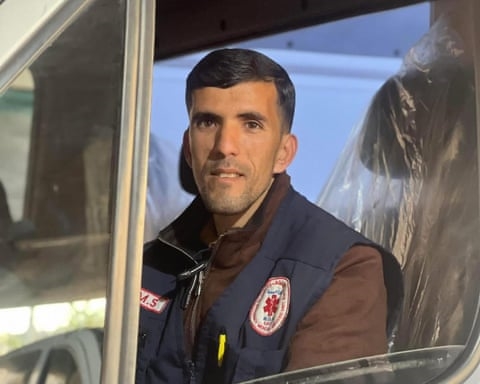
The reported cessation of hostilities in Gaza last October has failed to halt the steady toll of civilian casualties, with the recent killing of a volunteer ambulance driver highlighting the ongoing peril. Abed Elrahman Hamdouna, a 31-year-old father of two, was reportedly killed in a drone strike while traveling to a family gathering earlier this month.
His death brings the number of Palestinians killed since the truce was announced to over 670, with hundreds more injured, according to local health authorities. Strikes across the territory have continued at a reported average of roughly ten per day over the past five months.
Hamdouna’s family had felt a measure of relief when the ceasefire was declared. As a paramedic operating in northern Gaza, he had been at constant risk, volunteering to transport the wounded amid widespread attacks on healthcare infrastructure. His father stated bluntly that the truce exists only in rhetoric, not in reality.
The incident unfolded as Hamdouna’s family prepared for a Ramadan evening meal. When he failed to arrive, relatives grew concerned. The news of his death soon reached his brother, who rushed to the hospital, left to break the tragic update to their parents abroad.
Hamdouna joins a grim list of more than 1,500 healthcare workers reported killed since the conflict began, with at least ten slain during the current ceasefire period. Aid organizations and UN experts have repeatedly accused military forces of systematically dismantling Gaza’s medical system, describing the targeting of health workers and facilities as a deliberate strategy.
The head of emergency services in northern Gaza stated that nearly 80% of ambulances have been lost since the war’s outset, crippling rescue capabilities. For those still serving, the work has become profoundly dangerous. A medical student who often worked alongside Hamdouna described ambulances as little more than basic transport, lacking proper equipment for emergency care.
The student recalled a final conversation with Hamdouna just hours before learning of his death, expressing shock and devastation. He described a reality where survival is measured day by day, with future aspirations replaced by the immediate tasks of securing water and power.
Despite initial hopes that a ceasefire would bring safety, medical personnel report that Gaza remains a war zone. A pervasive sense of powerlessness prevails among civilians and responders alike, underscoring a tragic disconnect between diplomatic announcements and the enduring violence on the ground.