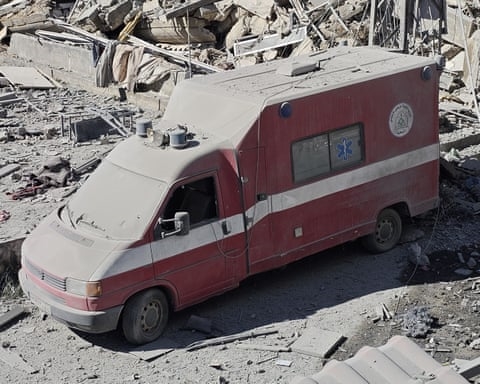
Healthcare personnel and local officials in southern Lebanon are reporting a pattern of deliberate military strikes against medical facilities and ambulances. They describe a campaign that includes the alleged use of “double-tap” tactics, where an initial bombardment is followed by a second strike targeting first responders who arrive at the scene.
According to figures from the Lebanese health ministry, over 120 medical sites and vehicles have been hit since early March, resulting in dozens of medical staff killed and wounded. The conflict escalated following rocket fire into northern Israel, prompting a sustained military response.
International humanitarian law explicitly protects medical workers and infrastructure, and the deliberate targeting of such entities can constitute a war crime. A leading human rights organization has reiterated that medical personnel are civilians and that attacks on them are unlawful.
On-the-ground inspections of several destroyed clinics and damaged ambulances in southern districts revealed no indications of military use at these sites. The military has previously accused armed groups of using ambulances for militant purposes, an allegation denied by Lebanese authorities who called it a pretext.
The majority of the targeted health services are affiliated with organizations connected to Hezbollah, though state civil defense and independent charities, including the Red Cross, have also been struck. Medical staff assert these attacks are part of a broader strategy to degrade civilian infrastructure and render the region uninhabitable.
“The objective is to prevent normal life and force people to leave,” stated the head of one emergency medical service, standing before a lot of wrecked ambulances. He described a cycle where displaced families return to evacuation zones only to have their homes bombed, with rescue teams then coming under fire.
Accounts from responders detail harrowing protocols adopted for survival. Teams have been reduced in size, personnel avoid gatherings, and they sleep dispersed in ambulances to avoid a single strike wiping out an entire unit. “We try to act as visibly as possible, to make it clear we are medics,” said one exhausted coordinator, who had just helped dig colleagues out of rubble. “But if the other side disregards the rules, no precaution matters.”
The strain on the healthcare system is severe. Hospitals are overwhelmed with casualties, with medical directors noting a grim trend of fewer wounded and more fatalities arriving. The psychological toll is immense, with responders recounting moments of arriving at bombed sites only to discover their own family homes destroyed.
Despite the extreme danger and trauma, many feel compelled to continue their work. “Before this, if you asked me to return to this job, I would have refused,” one paramedic said. “But when the war started, we found ourselves helping. What else can we do? This is our home.”