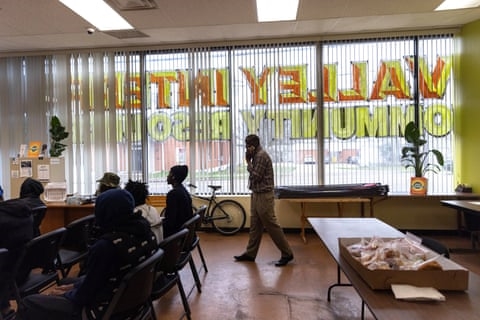
A growing community of Mauritanian immigrants in Ohio is living under the shadow of deportation, fearing a return to a homeland they fled due to systemic discrimination and human rights abuses. Concentrated in the Cincinnati area, particularly in the village of Lockland, these families now find themselves at the center of a national immigration enforcement crackdown.
Many, like one former musician who asked to be identified only as Khalidou, left Mauritania after facing persecution. He recounted being imprisoned for five days after a performance where he criticized government services. “The country is deeply divided,” he said, describing an environment of entrenched racism. His journey to the United States in late 2023 was harrowing, involving a robbery by an armed gang during the trip through Mexico.
Over the past two years, thousands of Mauritanians have undertaken similar perilous routes, often traveling through South America and crossing the U.S.-Mexico border to seek asylum. This has led to a significant population increase in parts of Ohio, drawn by affordable housing and available jobs in manufacturing and food processing.
Their arrival has not been without local friction. Reports emerged of overcrowded housing and strained municipal resources in Lockland, a working-class community. Some long-time residents initially complained about changes to the neighborhood, though community advocates note that the situation has improved as new arrivals have settled in and obtained work authorization.
The greater threat, however, comes from federal immigration policy. Immigration court data shows a backlog of nearly 20,000 cases for Mauritanian nationals, one of the highest for any African nation. Enforcement actions have reportedly led to dozens of deportations since the start of the year, with individuals sometimes detained immediately after routine check-ins with immigration authorities.
Advocates stress that for Black Mauritanians, many from the Fulani ethnic group, deportation is not merely a legal consequence but a potential death sentence. Mauritania, where slavery was the last country in the world to formally abolish it, continues to grapple with the practice and severe discrimination against its Black population by a minority Arab-Berber ruling class.
“No one wants to be sent back to a place that still resembles an apartheid state, where slavery exists,” said Amadou Ly, a human rights advocate with the Mauritanian Network for Human Rights in the U.S. “That is the core reason for their flight and their fear.”
Local support networks have emerged to assist the community. In Lockland, a bicycle repair workshop has become a hub, providing donated bikes to hundreds of newcomers to help with transportation. The organizer, Vincent Wilson, noted that while many have since found jobs and bought cars, a pervasive anxiety remains. “People go to their court appointments in Cleveland and sometimes don’t come back,” he said. “Others are in county jail for minor violations, facing likely deportation.”
For those awaiting asylum decisions, life is in limbo. Khalidou, who applied for protection over a year ago, continues to work and build a life in Ohio with his wife and child. Yet, every scheduled meeting with immigration officials carries the risk of sudden detention and removal.
“I hope it never happens,” he said, reflecting on the possibility of deportation. “But you can never be sure.”