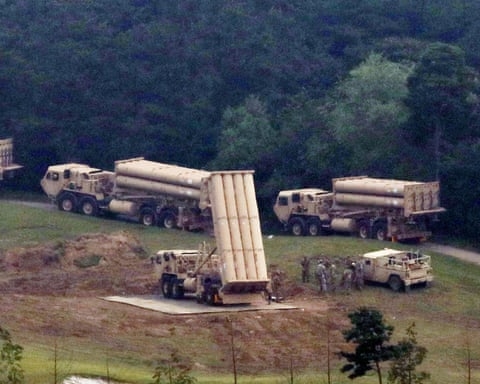
A significant redeployment of American military hardware, including elements of a key missile defense system, from South Korea to the Middle East has prompted questions about regional security dynamics and alliance commitments.
For nearly a decade, the Terminal High Altitude Area Defense (THAAD) system has been a cornerstone of the allied defensive posture on the Korean Peninsula. Its initial deployment, despite significant local and geopolitical friction, was framed as a critical deterrent against ballistic missile threats from the North. Recent reports, however, indicate components of this system, along with other assets like Patriot missile batteries, are being relocated to support ongoing U.S. military operations against Iran.
This strategic transfer has ignited a debate in Seoul regarding the long-term reliability of external security guarantees and the wisdom of heavy reliance on transient allied systems. Officials have moved quickly to project confidence, asserting that national defense capabilities remain robust. The country’s president emphasized that the nation’s substantial independent military budget and advanced indigenous systems ensure continued deterrence, downplaying the operational impact of the redeployment.
Nevertheless, security analysts express concern that such movements could be misinterpreted in Pyongyang, potentially encouraging provocative actions to test the resolve and readiness of the remaining allied forces. The situation underscores a broader anxiety that Washington’s strategic focus is being pulled toward the Middle East, possibly at the expense of attention to Northeast Asian flashpoints, including the Taiwan Strait and the North Korean nuclear program.
The ripple effects extend to Japan, another key U.S. ally in the region, which hosts a major American military presence. Reports of U.S. naval assets based in Japan being deployed to the Arabian Sea have sparked political discussions in Tokyo about the intended scope and rules governing the use of local bases.
The episode has strengthened calls within South Korea for an accelerated enhancement of its own independent defense capabilities to mitigate future uncertainties. The prevailing view among observers is that while the immediate defensive gap may be manageable, the incident highlights the vulnerabilities inherent in dependency on forward-deployed allied systems that can be withdrawn according to global priorities. The expectation now is for clear agreements to ensure the swift return of such assets and to minimize any prolonged reduction in regional defensive readiness.