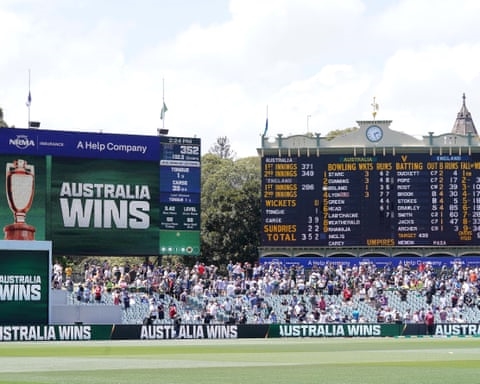
The England and Wales Cricket Board faces a familiar and difficult task as it prepares to review another unsuccessful Ashes campaign in Australia. The nature of that review, however, is expected to be limited, as the ECB’s own authority over the sport’s direction has significantly diminished.
Historical attempts to diagnose and cure England’s repeated failures down under have followed a pattern. Past inquiries, such as the extensive Schofield Review, led to tangible changes like the creation of a director of cricket role, which contributed to a rare series win in 2010-11. More recent efforts, including a high-performance review led by former captain Andrew Strauss, have seen their core proposals—aimed at streamlining domestic cricket to better prepare players for Australian conditions—rejected by the county clubs.
In a recent statement, Strauss argued that systemic change, not just personnel changes, is essential to break the cycle of defeat. “To alter this one-sided narrative,” he suggested, “requires a genuine willingness to reform the structures that feed the national team.”
Yet, the ECB appears to have little power to enact such reforms. In a significant shift, the board has ceded control in key areas. The recent sale of a majority stake in The Hundred franchises means the ECB will, for the first time since central contracts began, lose the authority to withdraw players from that tournament for national duty. This could directly impact preparation for subsequent Test series.
Furthermore, the power to reshape the domestic schedule—a frequent point of contention—effectively rests with the counties. Despite the ECB and the players’ association favoring a more condensed first-class season akin to Australia’s Sheffield Shield, various proposals have been voted down. The County Championship will therefore remain at 14 matches per team, largely confined to the spring and autumn.
This dynamic leaves the national governing body in a paradoxical position: responsible for the performance of the England team, but without full control over the system that produces the players. While the ECB could theoretically force change by amending its own constitution—a move that succeeded during the creation of The Hundred—there is little current appetite for such a confrontation.
The result is a state of paralysis. With deep structural reform off the table, the ECB’s options for responding to another Ashes defeat are reduced to the very surface-level changes its own reviews have deemed insufficient: altering the coaching staff or leadership. For now, the cycle appears set to continue.