The recent Boxing Day Test in Melbourne, which concluded in just two days, has reignited discussions about the rarity of such swift conclusions in cricket’s longest format. With only 27 of over 2,600 Tests finishing inside two days, these matches represent a statistical anomaly. Yet, the current Ashes series has already produced two, adding to another in Australia just a few years prior. This recent cluster prompts a closer examination of the historical context, particularly between these two storied opponents.
Historically, many early two-day Tests occurred in the 19th century, often due to challenging pitch conditions. Others involved developing cricketing nations finding their footing at the highest level. A significant gap followed from the post-war era until the turn of the millennium, with only a handful of exceptions, often involving dominant teams overpowering struggling sides or matches played in extreme, bowler-friendly conditions.
Notably, eight of these 27 abbreviated contests have featured England and Australia. Beyond the current series, six previous encounters date back more than a century. The most famous of these is arguably the 1882 match at The Oval, a contest that famously birthed the Ashes legend. In a dramatic low-scoring affair, a controversial run-out decision involving W.G. Grace famously ignited Australian bowler Fred Spofforth, who spearheaded a narrow seven-run victory, leading to the satirical obituary for English cricket.
The 1888 series in England saw an entire three-Test rubber concluded within two days per match. A combination of a wet summer, resulting in poor pitches, and the presence of several of history’s most statistically dominant bowlers created a perfect storm for quick finishes. Australia managed to win the first shootout but were comprehensively defeated in the next two.
Another tight two-day battle occurred at The Oval in 1890. Heavy rain again dictated terms, with 22 wickets falling on the first day on a drying surface. Set 95 to win, England appeared comfortable before a late collapse evoked memories of 1882. They ultimately scrambled to a tense two-wicket victory.
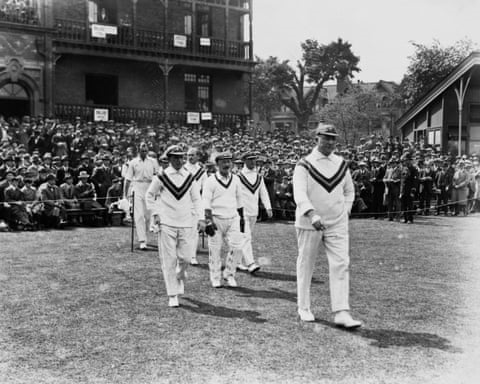
The 1921 Trent Bridge Test stands as a more modern historical marker, being the only such Ashes match between the 1800s and the recent spate. It also showcased a pivotal tactical evolution. Australian captain Warwick Armstrong’s decision to open the bowling with a pair of genuine fast bowlers, Jack Gregory and Ted McDonald, proved devastatingly effective on an English pitch, dismantling the home side and cementing the fast-bowling partnership as a potent strategy.
These historical snapshots reveal that while two-day Tests remain uncommon, they are woven into the fabric of the Ashes rivalry, often arising from a confluence of potent bowling, challenging conditions, and pivotal moments that have sometimes altered the course of the game itself.