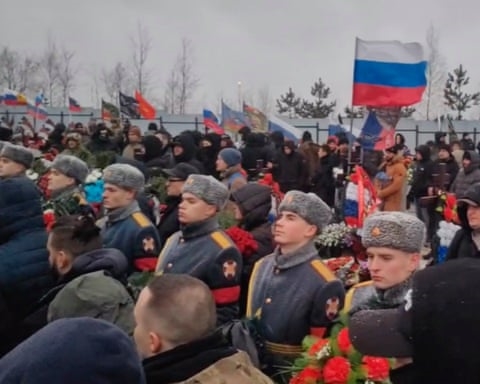
The recent death of a prominent paramilitary leader has cast a stark light on Moscow’s tightening grip over the irregular forces that emerged during the conflict in Ukraine. Stanislav Orlov, founder of the Española volunteer unit, was laid to rest in a ceremony at one of Russia’s most revered sites, the Cathedral of Christ the Saviour. The funeral drew hundreds, with mourners lighting flares and invoking a motto of unity. Yet, the official circumstances of his death remain shrouded in silence.
Contrary to initial battlefield rumors, multiple reports indicate Orlov was killed not in Ukraine, but at his residence in Crimea. Footage published by an exiled media outlet appears to show armed personnel approaching his home, followed by gunfire. Analysts interpret this event not as an isolated incident, but as part of a deliberate campaign by Russian security structures to rein in autonomous armed groups, a policy that gained urgency following the armed rebellion by the Wagner mercenary group in 2023.
During the early phases of the large-scale military campaign, formations like Española—a unit known for recruiting from football fan circles and espousing ultranationalist views—were tactically useful. They participated in intense urban combat and served as a potent symbol of fervent, grassroots patriotism, complementing state narratives. The group also cultivated a significant public profile, with its symbols appearing at major sporting events and former athletes among its ranks.
However, the tolerance for such entities operating outside the formal military chain of command evaporated after the Wagner revolt, which presented a direct challenge to state authority. In the aftermath, the security apparatus has moved decisively to dismantle or integrate independent units. Española itself announced its dissolution and absorption into the regular armed forces just months before its founder’s death.
Political observers suggest Orlov’s killing serves a dual purpose: it removes a figure who had slipped from direct control and sends a stark message to other potential challengers. The aim is to discourage any independent political or military ambitions, especially with the potential future return of battle-hardened veterans. The muted reaction from typically vocal pro-war commentators online underscores the chilling effect of this message.
The funeral itself embodies a central contradiction. The state facilitated a send-off in a hallowed national space, sanctifying the figure of the fallen militant. Yet, this posthumous honor stands in sharp contrast to the manner of his death, which analysts describe as a demonstrative act for stepping beyond permissible limits. This pattern mirrors the handling of other figures: while their memory is not officially erased, their elimination clearly delineates the boundaries of power.
The underlying strategy appears consistent: celebrate the contribution of radical elements to the national cause, but decisively neutralize any who threaten to consolidate independent influence. The state permits the memory of such figures to persist, even at prominent memorial sites, but the fundamental lesson is unequivocal—autonomous power structures will not be tolerated.