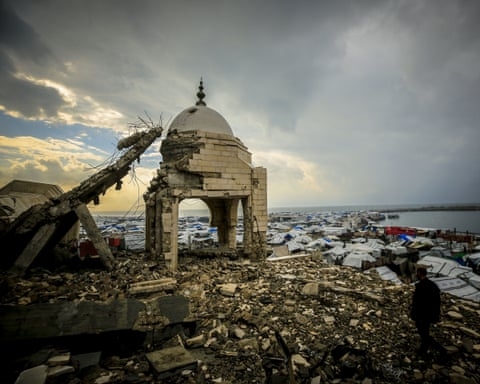
The word “ceasefire” has echoed through international diplomacy for months, presented as a step toward peace. Yet for the people of Gaza, the reality on the ground tells a different story. Despite official announcements, the fear, destruction, and loss of life have not ceased.
Since a truce was declared in October, hundreds of lives, including dozens of children, have been lost to continued violence. The sounds of explosions remain a constant backdrop, confining many to their homes. Daily existence is a struggle marked by severe shortages of water and cash, shattered infrastructure, and a pervasive lack of electricity or connectivity. Families live in the skeletal remains of buildings or in tents, exposed to winter rains and mud, with no safe haven in sight.
A newly imposed boundary, known as the “yellow line,” has become a deadly frontier. Reports indicate that approaching this invisible demarcation can be fatal. For those living nearby, life is punctuated by the tremors of artillery and the dread of so-called explosive robots—remotely operated devices capable of leveling city blocks. The air often carries the acrid smell of smoke from attacks, raising fears about the munitions used.
The profound human cost extends beyond physical hardship. Countless personal futures are on hold. Separated families, severed engagements, and the simple hope to rebuild a home or reunite with a loved one feel like distant dreams. While political processes discuss a “day after,” the present for Gazans is defined by an agonizing limbo, a state of waiting for a normalcy that never arrives.
Ultimately, the gap between diplomatic language and lived experience could not be wider. Peace, security, and a stable home—fundamental rights taken for granted elsewhere—remain out of reach. In the absence of tangible change, resilience itself becomes a form of survival, a fragile hope clung to amidst the rubble. The world speaks of peace, but in Gaza, its promise remains painfully abstract.