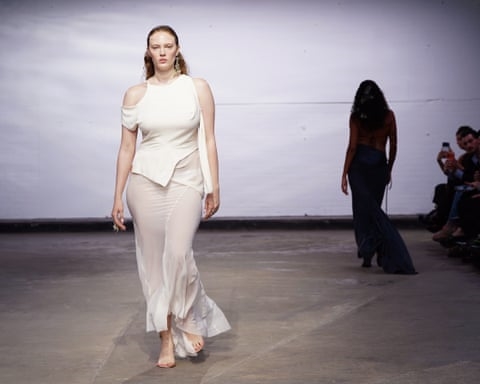
While much of the global fashion scene appears to be narrowing its focus, a contingent of London-based designers is making a deliberate stand for representation. Recent runway shows have featured a spectrum of body types, marking a notable counterpoint to a broader industry shift back towards ultra-thin silhouettes.
Designers such as Karoline Vitto, Phoebe English, and Sinead Gorey presented their latest collections on models ranging from mid-size to plus-size. This move comes amid growing concern from industry observers that hard-won progress toward size inclusivity is being eroded. Recent seasonal reports from major fashion capitals indicated that plus-size representation on runways remained staggeringly low, at less than one percent.
“For my return to the runway, it was essential to reflect real wearers,” stated designer Karoline Vitto, whose brand caters to a wide size range. She noted a desire to directly challenge the prevailing narrative that exclusively promotes thinness. Lacking the budget for top-tier modeling agencies, Vitto’s show featured advocates and models who believed in her mission, some covering their own travel costs to participate. “Our cast had varied proportions—different busts, hips, shoulders. It’s fundamental, yet still rare to see such diversity presented as standard,” she explained.
Other labels employed street-casting methods, tapping non-professional models from everyday life or social media, which also aligns with tighter budgets. These shows featured personal touches, like English casting her mother, and celebrated specific forms, as Gorey did with curve-accentuating designs.
Casting director Emma Matell acknowledged the push from emerging designers but emphasized that lasting change requires leadership from the top. “New-generation designers are operating within their means to be inclusive. However, they look to the major luxury houses for cues on what is deemed commercially safe and desirable,” Matell observed. She pointed out that when leading brands retrench to a very narrow standard, it creates a ripple effect, pressuring models of all sizes to conform to a smaller ideal.
This industry-wide contraction is often linked to broader cultural trends, including the normalization of pharmaceutical weight-loss aids. Matell noted the practical impact: “We’re seeing models across the board become smaller this season, as the market incentivizes it.”
Despite the challenging climate, proponents remain committed. “True inclusivity is not a passing trend,” Vitto asserted, highlighting other female-led brands championing this cause. “It’s no accident that these body-diverse brands are often helmed by women. We understand these pressures intimately.”
Beyond size, London’s runways also showcased greater age diversity this season, with several shows featuring models in their forties and beyond, suggesting that the push for a more realistic reflection of society continues on multiple fronts.