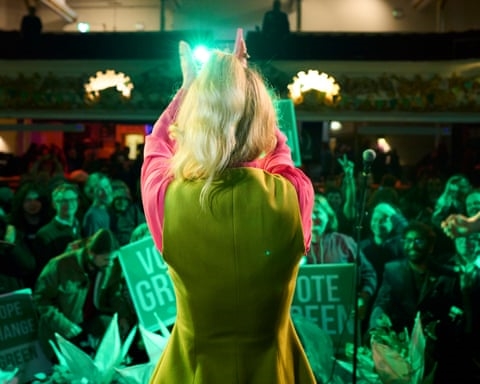
In the visual noise of modern politics, a new MP has cut through with a shade best described as an aggressive chartreuse. Dubbed “gross green” by online trendsetters, the bold waistcoat worn by newly-elected MP Hannah Spencer has become an unlikely focal point, demonstrating a keen understanding of digital-age symbolism.
The colour itself is a topic of debate—alternately labeled “phlegm green” or seen as an evolution of the “brat green” that dominated fashion feeds two summers prior. Its power lies less in its official name and more in its status as a recognisable cultural token. By adopting it at a pivotal moment, Spencer has performed a deliberate act of political semiotics, aligning herself with the aesthetic language of a younger, online-literate electorate.
This strategy is not without precedent. Recent political history shows campaigns successfully harnessing viral aesthetics to forge connections with demographics that consume information through memes and micro-trends. The move carries inherent risk, as public figures can appear to be chasing relevance. However, in a fragmented media landscape, such shared visual cues can function as a rare common tongue.
The phenomenon speaks to a broader cultural shift where meaning is increasingly derived from seemingly innocuous trends. A specific shade of green transcends fashion to become a badge of awareness, a signal of being culturally plugged-in. It represents a modern political calculus where a garment’s colour palette is analysed as intently as a policy paper.
Ultimately, the “gross green” waistcoat is more than a sartorial choice. It is a case study in how political identity is now constructed and communicated, proving that in today’s climate, a viral colour can be as potent a tool as a traditional manifesto.