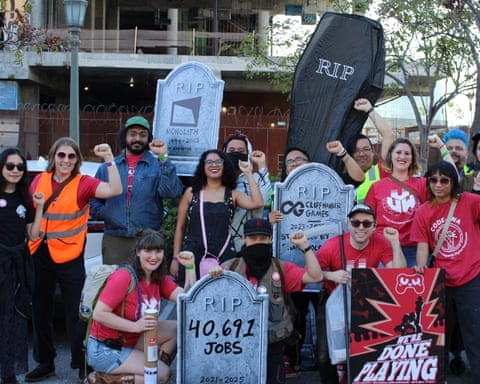
While the gaming world’s elite gathered inside a Los Angeles theater for a night of celebration, a starkly different scene unfolded on the sidewalk outside. Against the backdrop of a lavish industry awards ceremony, a group of video game professionals staged a protest, holding signs that declared the industry “strip-mined” and decried corporate “greed.”
The demonstrators, members of the United Videogame Workers union, chose the high-profile event to spotlight what they describe as a systemic crisis. They pointed to a wave of tens of thousands of layoffs that have swept through the sector in recent years, alongside the rapid integration of artificial intelligence into development and alleged anti-union tactics by major studios.
“The art we create is being dismantled for parts to make a handful of executives very wealthy,” said one union representative, who spoke at the protest. “The passion for the craft, the care for the product—it’s being sacrificed for profit margins.”
Protesters argued that the instability faced by developers has a direct, negative impact on the games themselves. They connected player frustrations—such as titles launching with technical problems, experiencing major delays, or being cancelled abruptly—to the lack of job security and fair working conditions for the teams behind them.
“Ensuring developers have protections, healthcare, and cannot be arbitrarily replaced is not just a worker issue,” explained another union member. “It leads to more stable development cycles, more ambitious projects, and ultimately, better games for everyone. This fight is for the health of the entire medium.”
The protest served as a jarring counterpoint to the evening’s glitz, emphasizing a deep-seated tension between the industry’s public-facing celebration of creativity and the internal realities of its workforce. The message from the picket line was clear: the future of gaming depends on valuing the people who build it.